
Six, Two, and Even
An old expression, a memorable manager, and October baseball is here! Welcome to the lighter side of Tendere.

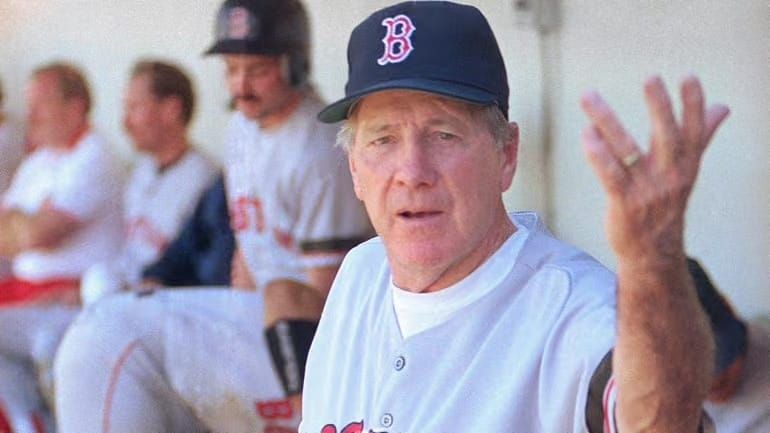
Some expressions make perfect sense the first time you hear them. Others, like Yogi Berra's, make absolutely no sense but somehow stick with you for the rest of your life.
“Nobody goes there anymore. It's too crowded.”
“You can observe a lot by watching.”
“Baseball is 90% mental, the other half is physical.”
“Six, two, and even.” It's not one of Yogi's, but it's firmly in Boston baseball's pantheon.
A Little History
The expression has traveled an interesting road.
- The betting world: “Six, two, and even” has roots in horse-racing odds and bookmakers' language. Precisely how it entered everyday conversation is less certain.
- 1941 — The Maltese Falcon: Humphrey Bogart's Sam Spade uses the expression in the classic film noir, bringing it to a wider audience.
- 1949 — The Big Band Era: Trumpeter and bandleader Harry James records an instrumental titled Six, Two and Even, giving the expression a place in popular music.
- The 1960s — Dick Tracy: The animated television series gives the expression another life as a radio sign-off: “Six, two, and even. Over and out.”
- 1988–1991 — Joe Morgan's Red Sox: Boston manager Joe Morgan popularizes the expression for another generation of baseball fans. Morgan had picked it up from his old minor-league manager, Joe Schultz, and made it part of his own wonderfully unpredictable vocabulary.
Morgan used the expression freely, particularly when reporters wanted an explanation he wasn't inclined to provide.
And sometimes, it seemed, simply because he liked the sound of it.
“¿Qué pasa? Six, two, and even. Let's go, boys!”
A Tip of the Cap
Joe Morgan passed away on September 5, 2026, at the age of 95.
His passing—and the Red Sox' winning streaks this season—brought back fond memories of the extraordinary summer of 1988, when Morgan won his first 12 games as manager and 19 of his first 20.
That was Morgan Magic.
In Joe's honor, we're naming this section of Tendere Six, Two, and Even.
RIP, Joe.
We may approach significant questions with serious analysis, but we'll always make time to catch a ballgame, listen to some good music, or keep an eye on a good movie.
Pop culture. That's what this place is for.
October Baseball Is Here!
The American and National League Championship Series are underway. Four wins separate each remaining club from a trip to the World Series.
In the American League, the Cleveland Guardians face the Tampa Bay Rays.
In the National League, it's the Los Angeles Dodgers against the Milwaukee Brewers.
One of these teams is not like the others.
The big-money Dodgers, seeking a rare World Series three-peat, have a player payroll of roughly $322.4 million.
Milwaukee, Cleveland, and Tampa Bay—three small-market teams—have combined payrolls of just over $285.1 million, based on reported opening-day payrolls.
That's $37.3 million less than the Dodgers alone.
Together, three teams spend less on players than one big-market team. Interesting timing for the upcoming MLB Players Association contract negotiations, isn't it?
Regardless of salaries, October baseball always reminds us that good pitching, timely hitting and great defense is a winning formula.
Four teams. Two pennants. Another Fall Classic.
Chances are—six, two, and even—it'll be memorable.
Let's go, boys!
For a wonderful firsthand account of Morgan Magic, read “They Called It Morgan Magic”, by Gordon Edes, a distinguished sportswriter who covered the Red Sox for 18 years at The Boston Globe and ESPN before becoming the team's official historian.