
When Your Money Has a Mind of Its Own

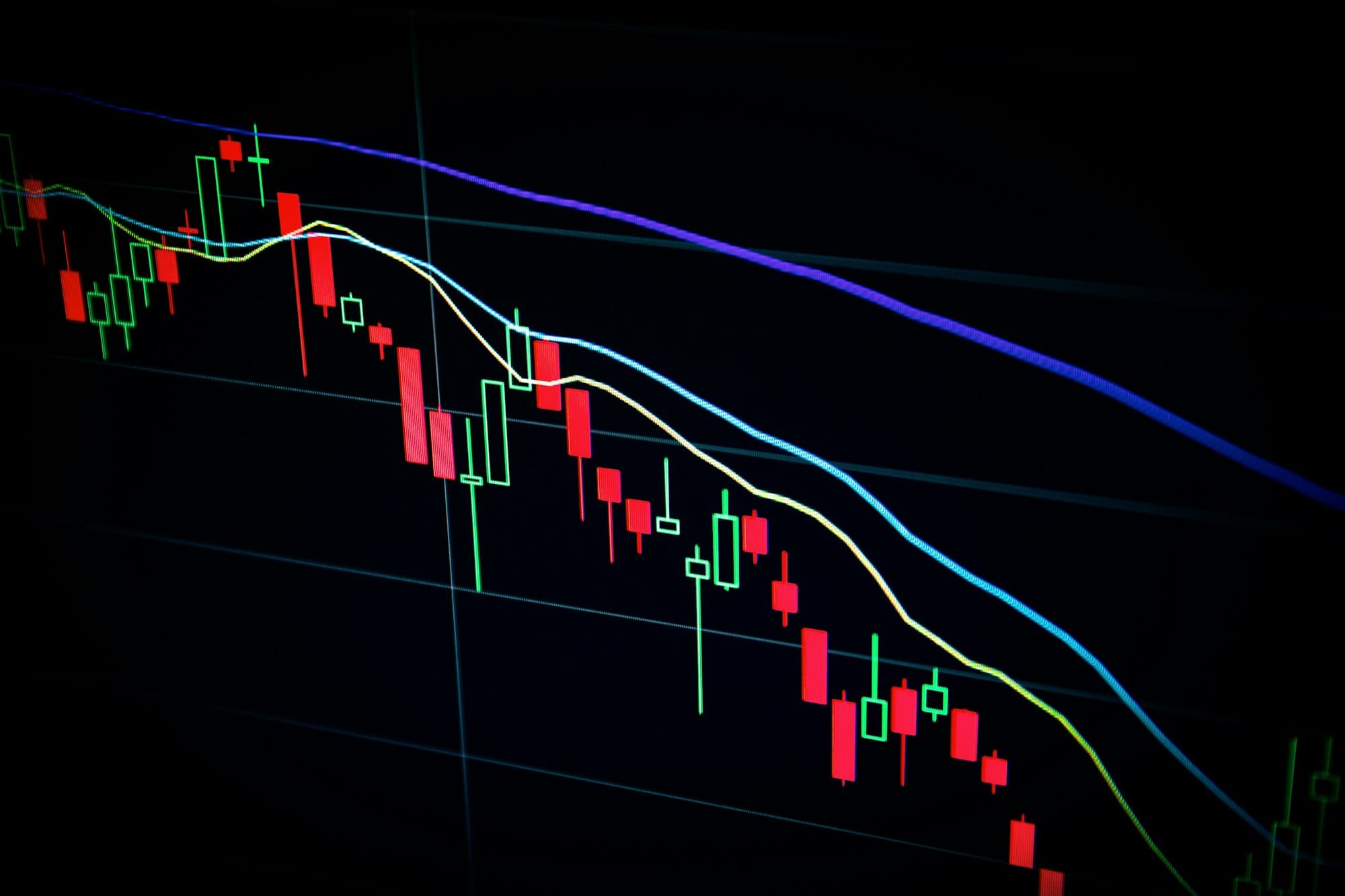
Robinhood is bringing autonomous AI agents to retail investing. The technology may change who performs the work of investing. But who makes the decision—and who bears the consequences?
For decades, the promise of financial technology has been greater access.
Online brokerages lowered trading costs, mobile apps put markets in nearly every pocket, and information once reserved for professionals became widely available.
Robinhood is now introducing AI that can move beyond explaining markets and evaluating opportunities to act on an investor's behalf.
It can act.
At its September 2026 HOOD Summit, Robinhood announced Robinhood Agents, an in-app experience designed to analyze markets, develop investment strategies, and trade on customers' behalf. The company's broader ambition is to make sophisticated trading capabilities available to individual investors.
Robinhood had introduced trading through externally connected AI agents earlier in 2026. The September announcement extended that approach to agents built directly into its app; the new experience was announced for a forthcoming rollout.
That is an important technological development. It also introduces a consequential question.
When investors delegate financial decisions to an AI agent, which decisions have they surrendered—and which responsibilities remain theirs?
From information to authority
A meaningful difference exists between asking AI to explain an investment and authorizing it to make one.
An AI assistant might summarize an earnings announcement, compare companies, identify portfolio concentration, or describe the risks associated with a proposed trade.
These activities can improve an investor's access to information. They may also help individuals make better-informed decisions.
But the investor still decides whether to act.
An autonomous trading agent introduces a different relationship.
The investor may establish an objective, define constraints, allocate capital, and authorize the system to execute transactions when specified conditions arise.
Robinhood's agentic trading model allows customers either to review proposed trades or, subject to applicable controls, authorize eligible transactions without approving each one. That transfers operating authority—not merely convenience—to the system.
The starting safeguards differ. Trade approvals are on by default for Robinhood's built-in agents, but off by default for externally connected MCP agents; approvals for MCP accounts are still rolling out. Customers can adjust the setting when available, and some trades may still require approval.
By letting customers approve each trade or authorize eligible transactions in advance, Robinhood's agentic trading model transfers operating authority—not merely convenience—to the system.
What remains human?
Consider an investor who asks an AI agent to manage a portion of a portfolio according to a defined strategy.
The investor may specify available capital, acceptable investments, risk preferences, and the conditions under which trades should occur.
The agent may monitor markets continuously, interpret information, identify opportunities, and execute transactions more quickly than the investor could independently.
There are plausible benefits.
An agent may reduce the burden of monitoring markets, apply rules more consistently, and help an investor respond to developments that would otherwise be missed.
But speed and consistency do not establish that the underlying decisions are sound.
An agent can consistently execute an unsuitable strategy, react quickly to misleading information, or follow reasonable-seeming instructions that produce unintended consequences as markets change.
And an investor who initially understands a strategy may not understand every decision made on its behalf.
Human authorization is not the same as meaningful human control: an investor may activate an agent without sufficient visibility into how it interprets instructions or executes the strategy.
The ability to turn an agent on or off is not, by itself, evidence that its decisions are appropriately governed.
Robinhood warns that agents can misinterpret instructions, act on incomplete or outdated information, and produce unexpected outcomes. Customers remain responsible for reviewing account activity, monitoring positions, and checking that an agent operates as intended.
Responsibility without continuous control
Robinhood's disclosures place ultimate responsibility for agentic trading decisions and outcomes on the customer.
That allocation is understandable in a self-directed investing relationship. Investors routinely bear the consequences of their decisions, including losses.
Responsibility remains with the individual even as direct involvement in particular decisions diminishes.
An investor may choose the objective and authorize the agent. Yet the agent may interpret instructions, evaluate information, and initiate individual transactions without further intervention.
Responsibility remains with the individual even as direct involvement in particular decisions diminishes.
This does not automatically make the arrangement inappropriate. Delegation is a familiar feature of financial services.
The question is whether the investor has sufficient information, control, and practical ability to supervise the authority being exercised.
Meaningful oversight depends on whether investors can assess a strategy's suitability, enforce the agent's boundaries, detect departures from the agreed strategy, reconsider automation when markets change, and reconstruct consequential decisions.
These are not merely interface-design questions. They concern how authority, accountability, and financial risk are allocated.
The problem with the human-in-the-loop assumption
A common response to concerns about autonomous AI is to retain a human in the decision process.
Robinhood's trade-approval option illustrates one version of this approach: the agent proposes an action, and the customer decides whether to approve it.
That may be an appropriate safeguard.
But an approval step does not guarantee meaningful oversight.
An investor confronted with frequent recommendations, unfamiliar technical explanations, or time-sensitive opportunities may begin approving transactions routinely.
The system's recommendations may become the practical default.
Alternatively, an investor may deliberately disable individual approvals because automation's value proposition is that it operates without continuous attention.
Neither configuration is inherently superior.
The right arrangement depends on the consequences of the decision, the system's reliability, the investor's understanding, and the effectiveness of the controls.
Requiring human approval for every action can become an empty ritual.
Removing approval without adequate safeguards can create a different problem.
The objective should not be to maximize human involvement or AI autonomy. It should be to establish which configuration produces defensible decisions and outcomes.
What would the evidence need to show?
Robinhood's announcement establishes a new capability. It does not, by itself, establish that AI-directed investing produces better financial outcomes for customers.
That distinction deserves attention.
Technical performance asks whether the system interprets instructions, retrieves accurate information, and executes eligible transactions correctly. Investment performance requires results measured against appropriate benchmarks over meaningful periods, accounting for risk, costs, market conditions, and investor behavior. Governance requires evidence that departures, ambiguity, intervention, and consequential decisions can be identified and explained.
A successful trade is not necessarily evidence of a sound decision process.
Nor is a losing trade necessarily evidence that automation failed.
Investment decisions involve uncertainty. The relevant question is whether the system operated within a defensible framework, using appropriate information, controls, and authority.
These distinctions matter before automated trading becomes an ordinary feature of retail investing.
The other side of the decision
The Commonwealth Bank of Australia illustrates the same challenge inside an institution: AI changes how work is performed, raising questions about productivity, workforce decisions, and organizational accountability. Robinhood brings that challenge to the individual investor.
Instead of asking which human roles should remain inside an organization, we ask which decisions an individual should continue to exercise personally—and which can reasonably be entrusted to an automated agent.
In both cases, technological capability is only part of the answer.
An organization can automate work without having established the appropriate consequences for its workforce.
An individual can automate financial decisions without establishing appropriate boundaries for delegated authority.
The existence of a capable system does not settle how it should be used.
The irreducible question
Financial markets have always involved delegation.
Investors rely on research analysts, financial advisers, portfolio managers, trading systems, and institutions whose judgments they cannot independently reproduce.
AI does not invent that relationship.
It changes its speed, accessibility, scale, and potentially the visibility of the decisions being made.
Robinhood's agents may make sophisticated investing tools available to people who previously lacked them. That possibility deserves serious consideration, not reflexive resistance.
But access to more powerful tools does not automatically create better investors or better outcomes.
The investor's responsibility, the platform's obligations, and the authority exercised by the technology must be understood together.
The central question is not whether AI should participate in investment decisions, but what evidence justifies its authority, what boundaries govern it, and how to assess its consequences.
The investor may delegate the decision. The investor cannot delegate the consequence.
The Irreducible examines the consequences of decisions about human and artificial intelligence, without presuming either should prevail.
Sources
Robinhood — HOOD Summit announcement (September 29, 2026)
Robinhood — Trading with your agent (approvals and disclosures)
